

7 Tips for Removing the Word "Should" from Your Vocabulary

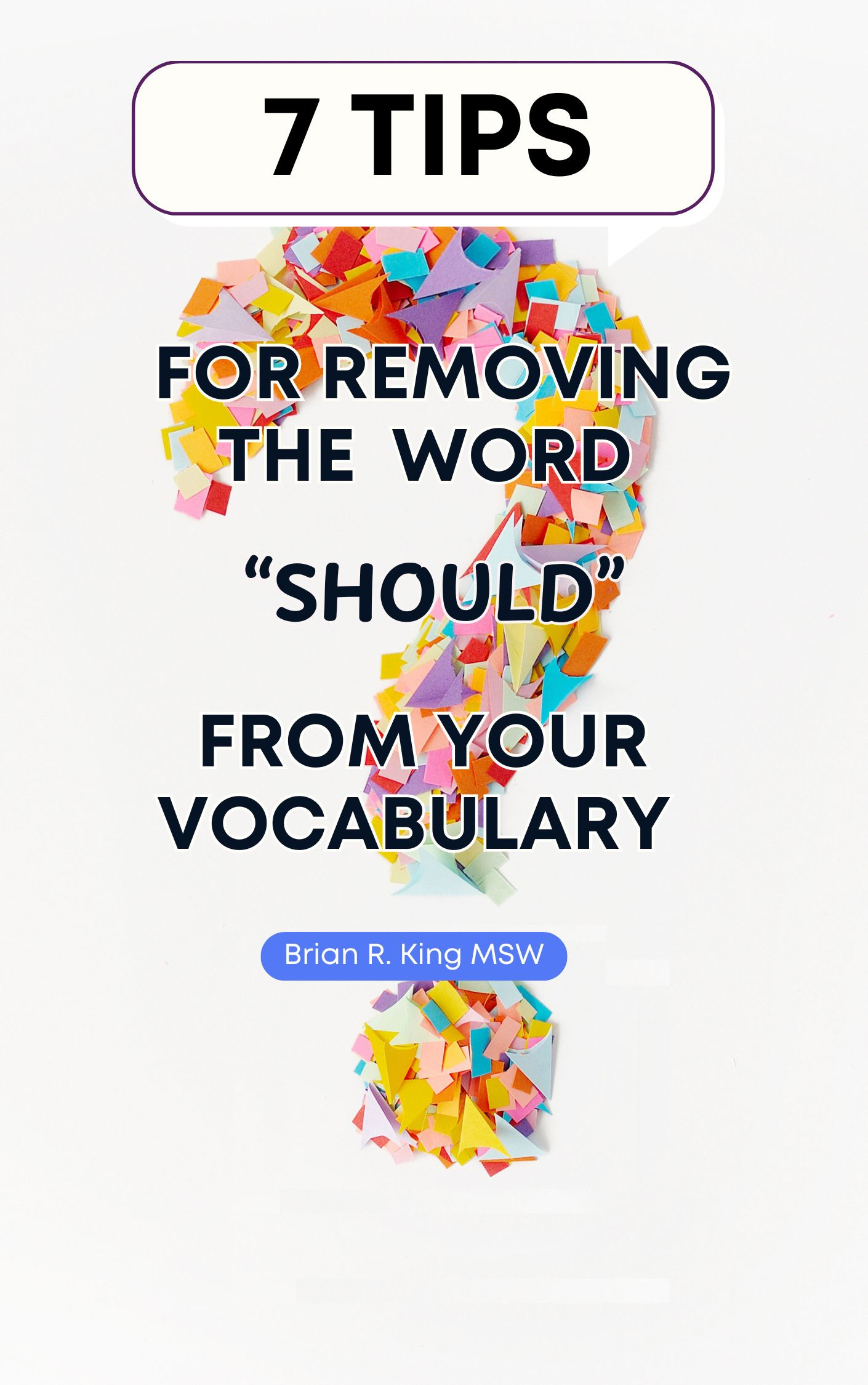
7 Tips for Removing the Word “Should” from Your Vocabulary
If you have ever noticed how heavy the word “should” feels, you are not imagining it. As I explain in the introduction to this guide, “should” often carries obligation, pressure, guilt, and rigid thinking. It sounds harmless. It rarely is.
This workbook page helps you shift from pressure to personal agency. From “I should” to “I choose.”
What You’ll Get
A clear, third-person guide that walks you through recognizing “should” statements, reframing them into empowering alternatives like “could,” “might,” or “I choose,” and practicing self-compassion along the way.
A special lens for neurodivergent adults, especially those with AuDHD, who feel the extra weight of internal and external expectations, as highlighted in the “Practice, Practice, Practice” section .
Guidance for creating your own replacement language using empowering alternatives listed in the “Instead of ‘should’” section, such as “It’s up to you,” “You have the opportunity to,” or “If you’d like” .
A structured 31-day reflection path to help you identify, trace, and reframe your “shoulds,” beginning with awareness and building toward flexible, values-based thinking .
How to Use It
Start by noticing when you say or think the word “should.” Awareness is the first step.
Write down one “should” you used today. Trace where it came from. Family. Culture. Social media. Your inner critic.
Reframe it using choice-based language. Instead of “I should exercise,” try “I choose to move my body because I want more energy.”
Focus on your values, not invisible rule books. Ask yourself what actually matters to you.
Practice daily. Small shifts count. You are rewiring habit, not flipping a switch.
Bottom Line
“Should” is often a shortcut to shame. Replacing it with choice restores your agency.
This is not about policing your language. It is about building self-awareness and self-respect.
You will not eliminate every “should.” You will get better at catching it. That is progress.
Download
Download your copy below and keep it nearby - on your desk, in your journal, or saved on your phone - so you can return to it whenever “should” starts running the show.
This is a fabulous idea. There are too many self-criticism that happen and should is central to so many of them.