

My Brain Thinks in Kittens
How I get clarity without forcing my brain to think in order

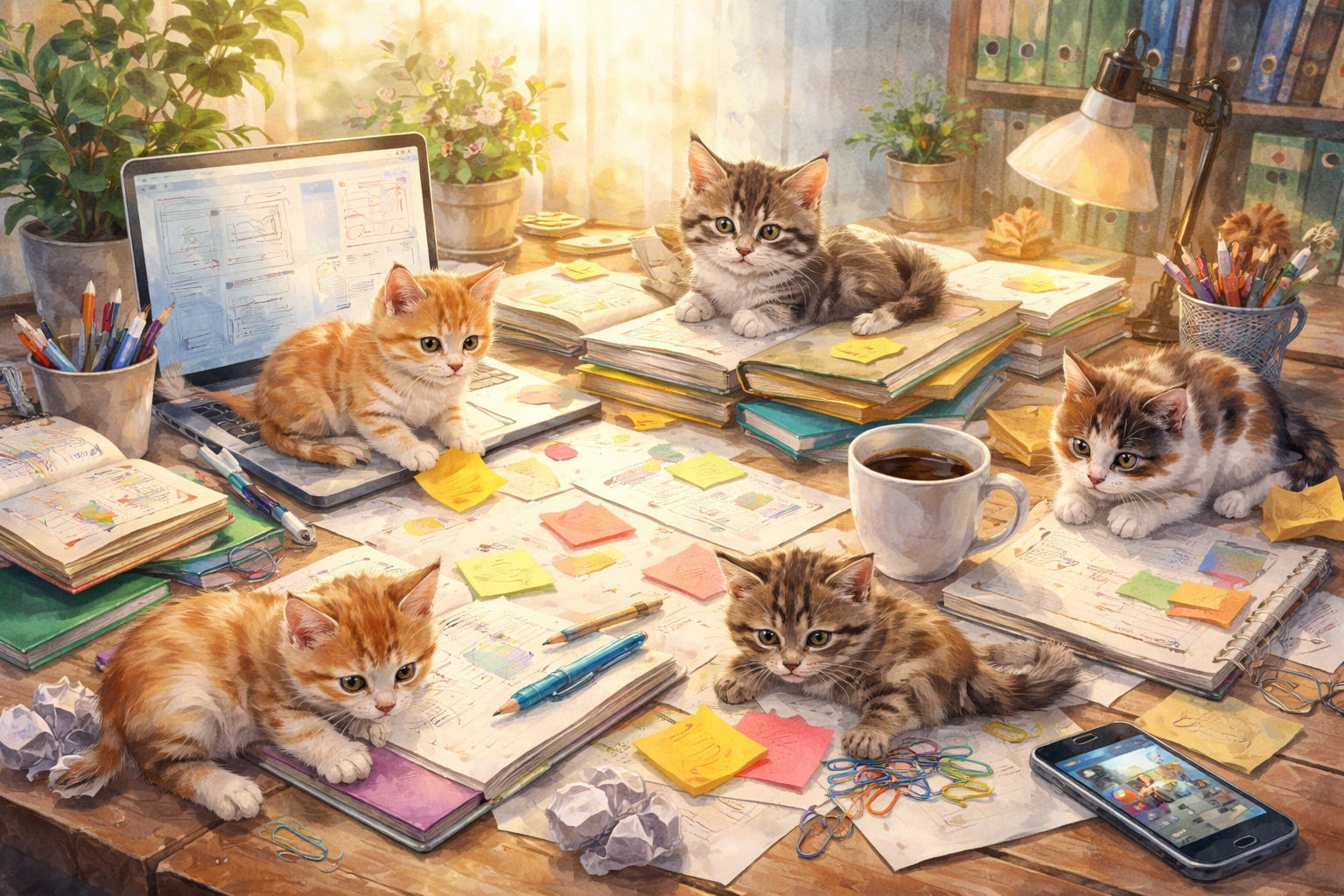
Talking to me can be like, “OMG, that reminds me of… no wait, gotta back up.”
Then I throw out thoughts about what I want to say, because this beautiful brain of mine thinks out of order.
I understand it’s frustrating for others. But if I try to organize my thoughts before putting them out there, it would be like asking me to organize kittens and expecting them to stay in line, not switch places, or wander off.
Once I’ve gotten it out, I do my best to connect the dots.
This is a main reason I record my sessions, so I can use AI to organize my observations, suggestions, and feedback in a way that doesn’t require a decoder ring.
Chunk First. Organize Later.
When I write articles or books, I’ve embraced the chunky writing my brain naturally produces.
I write a paragraph. An observation that rolled off my tongue perfectly. I don’t need a place for it. I need to write it down.
I use an organizational system for the chunks, like #quote, #dialogue, #scene, and so on.
Get it out first. Sort it later.
The Perfectionism Trap
Many people struggle with the belief that everything needs to be in order before you can speak your mind or write it down.
That’s perfectionism. And it keeps your thoughts locked inside.
I think this is one reason many of us have trouble getting started with tasks. We want the entire process laid out in our heads to guarantee safe passage from start to finish.
Not happenin’ in my head.
If it’s that important, I write the steps out.
At 56 years old, I still use lists for routines I’ve performed for decades, because my brain isn’t designed to hold it all at once. Let alone helping me find my place after the umpteenth distraction.
Speed Isn’t the Goal
It can take me longer to write things out.
So what?
Speed is a quality of productivity, not creativity.
Thanks for Being You,
Brian


Agatha’s Garden comes out in a few months.
A neurodivergent novel about finding yourself and breaking the family legacy of silence.
A young neurodivergent man inherits his great-aunt’s vast, untamed garden. But the deeper he learns its stories and hidden corners, the more it pulls him toward the wounds he’s avoided, and the truth his family buried. What begins as escape becomes a slow return to himself.
Join the waitlist today for early chapters, private author notes, and launch bonuses reserved for this list.
These bonuses disappear once the book is out.
First,I liked this post, immensely.
Secondly, as a non-neurodivergent individual and writer, I can say that these same problems befall me. It’s never best for me to try to write a perfect story, memoir, or Substack post. In fact it never works. My approach is different from what you outlined, Brian. But the end purpose is identical. Thanks for your encouraging ideas.