
The School System Gave Up on My Father
Unseen autism, unrecognized intelligence, and the strength my father passed down

When my sons and I were diagnosed with autism in the early 2000s, those diagnoses opened a Pandora’s box of questions and insight into my siblings, my parents, and the genetic legacy of my family.
As I learned more about the challenges I struggle with (while still managing to earn a master’s degree in social work and write several books without accommodations), I began asking my parents about their experiences.
My father and a few of his brothers likely grew up with undiagnosed autism. Dad also appeared to have dyslexia and dyscalculia. Between him and my mother, I inherited nearly every quirk, sensitivity, learning difference, and eccentricity hanging from the family tree.
Apparently, when it came to me my DNA saw an all you can eat buffet.
Getting Dad to say more than a few sentences at a time, let alone talk about himself, was like spotting a snipe in the wild.
I suspect hearing me talk about what I was discovering, and finally having language for experiences he had never been able to explain, helped him feel less ashamed of his own struggles.
Then, after several attempts and shoulder shrugs over the years, I asked again about his school experiences.
It was like opening a vault.
He said so much, and in such detail, that my heart broke for him.
His overarching takeaway was:
“They didn’t know what to do with me, so they just kept pushing me through.”
He attended school in the 1950s. When he started, his classroom was in the basement of a Lutheran church. He recalled being placed in a corner where he “did his own thing.”
I don’t know everything that happened in those classrooms. I don’t know what his teachers said to him or how the other children treated him.
But I know the message he carried out of school: Other people knew what to do, and he didn’t. Other people were smart and capable, he wasn’t.
The system kept moving him forward without helping him understand why learning seemed so much harder for him than it did for everyone else.
I didn’t ask him about homework or test taking. Since I knew how much I struggled with both, I understood.
What school failed to recognize was Dad’s extraordinary mechanical intelligence. He understood how things worked. He had a kinesthetic intuition that allowed him to learn with his hands and body in ways a textbook could never measure.
School may not have known what to do with him, but machines made sense.
Machines didn’t shame him for needing to understand how the pieces fit together. They gave him problems he could solve with his hands, his instincts, and his ability to keep going long after everyone else had stopped.
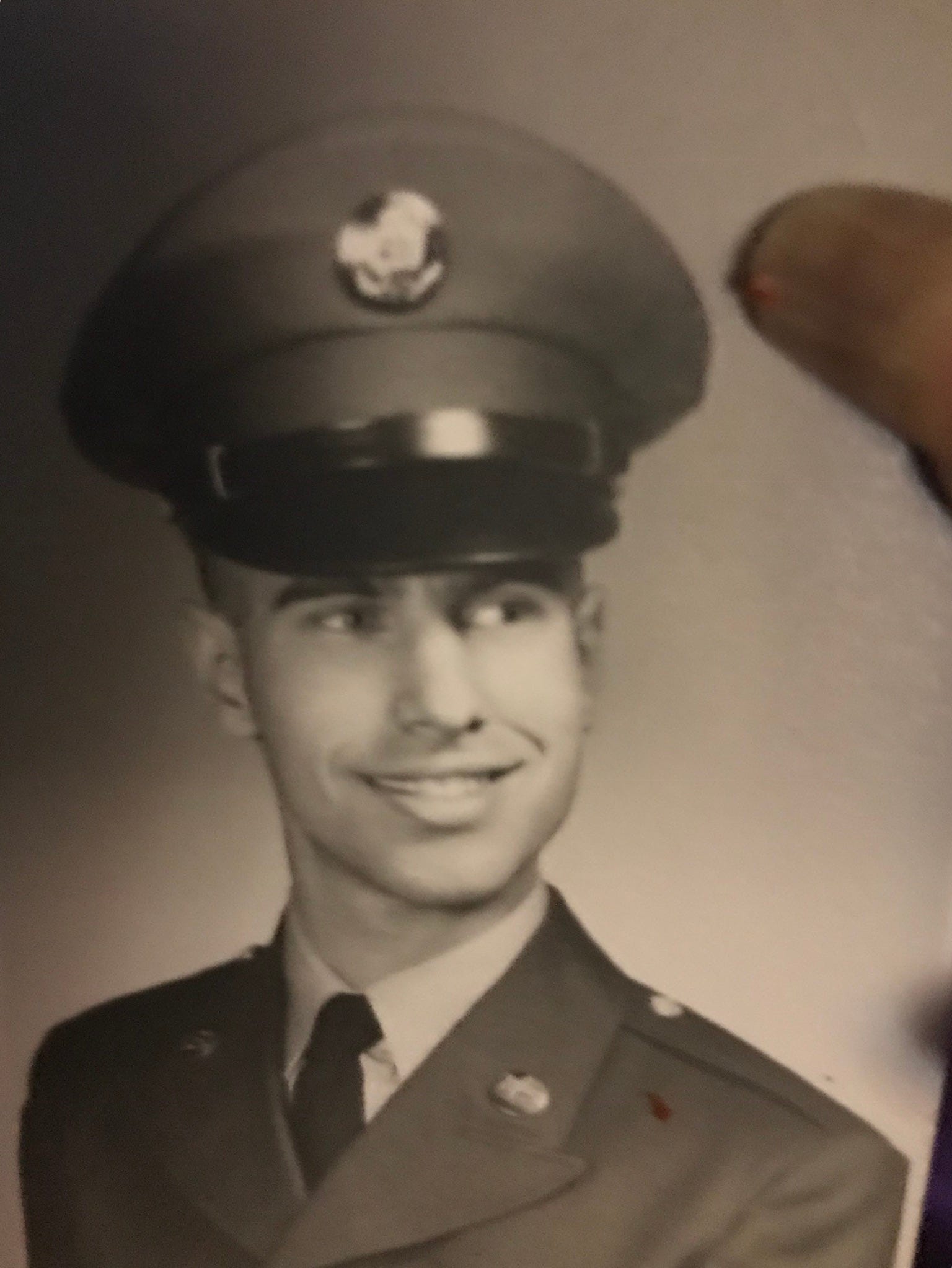
Dad earned a black belt in judo, served as an Army Ranger, and made a living as a firefighter before starting his own business installing fire and security systems.
Mom ran the office. Dad busted his ass in the field until the job was done.
Some of his buddies at the fire department called him “Gene the Machine” because he kept going. No matter how hard he worked, it never seemed to catch up with him.
That tenacity is one of the clearest things I inherited from Dad. I don’t quit. When an outcome matters to me, I keep working, adjusting, learning, and trying again until I find a way forward. A few things I’ve been pursuing for decades, and I’m still at them.
Dad spent most of his life in survival mode while feeling terrible about himself and suffering in silence. He had no idea how to be a parent; neither did his parents, who, by all accounts, were cold and abusive.
Understanding his life doesn’t erase that hurt.
But the more I learned about what shaped him, the easier it became to find compassion for the frightened and ashamed boy still living somewhere inside the man who raised me.
I became better able to openly express my gratitude for how hard he worked for us. I wanted him to know that I saw more than his mistakes. I saw the effort. I saw the exhaustion. I saw how much of himself he spent trying to provide what he didn’t know how to give emotionally.
I hope he was able to take some of that in.
Now, at 85, he no longer seems to remember who my family and I are. Age and changes in his brain have closed the vault again.
I’m grateful for the one day it opened.
I only wish I had known which questions to ask before so much of his story disappeared behind it.