

THE THICK OF IT
Life unedited. Living with AuDHD, chronic illness, disability, and everything that comes with it.

“There’s more to you than the reactions to what life throws at you.”
What You’re About to Read
These aren’t finished thoughts. They’re field notes. Things I notice in real time—in conversations, in my own life, in the patterns people live inside without realizing it. I don’t rush to clean them up. Because the part we try to skip past is usually the part that matters most.
I’m writing from the middle of it. Not looking back with the luxury of perspective. Not projecting forward with certainty about outcomes. Just here, noticing what’s true right now.
Some of these pieces will speak to you immediately. Others might land in a few weeks, when you see yourself in them. Skip around. Read what resonates. You don’t have to take them in order.
Contents
How We Bridge Gaps — Communication & Connection
Operation Hail Mary (~800 words)
A Conversation About Warm Drinks (~400 words)
How Your Brain Actually Works — The Neurodivergent Brain On Its Own Terms
Brain Like a Stuck Parking Brake (~1,200 words)
Magnolia Blooms Don’t Rush (~400 words)
When You Can’t See Clearly — Perspective & Self-Understanding
What I Miss When I’m Inside It (~1,400 words)
How We Bridge Gaps
Communication & Connection
These pieces explore what happens when two people can’t understand each other the same way. And how we don’t have to.
Operation Hail Mary (Semi-Spoiler)
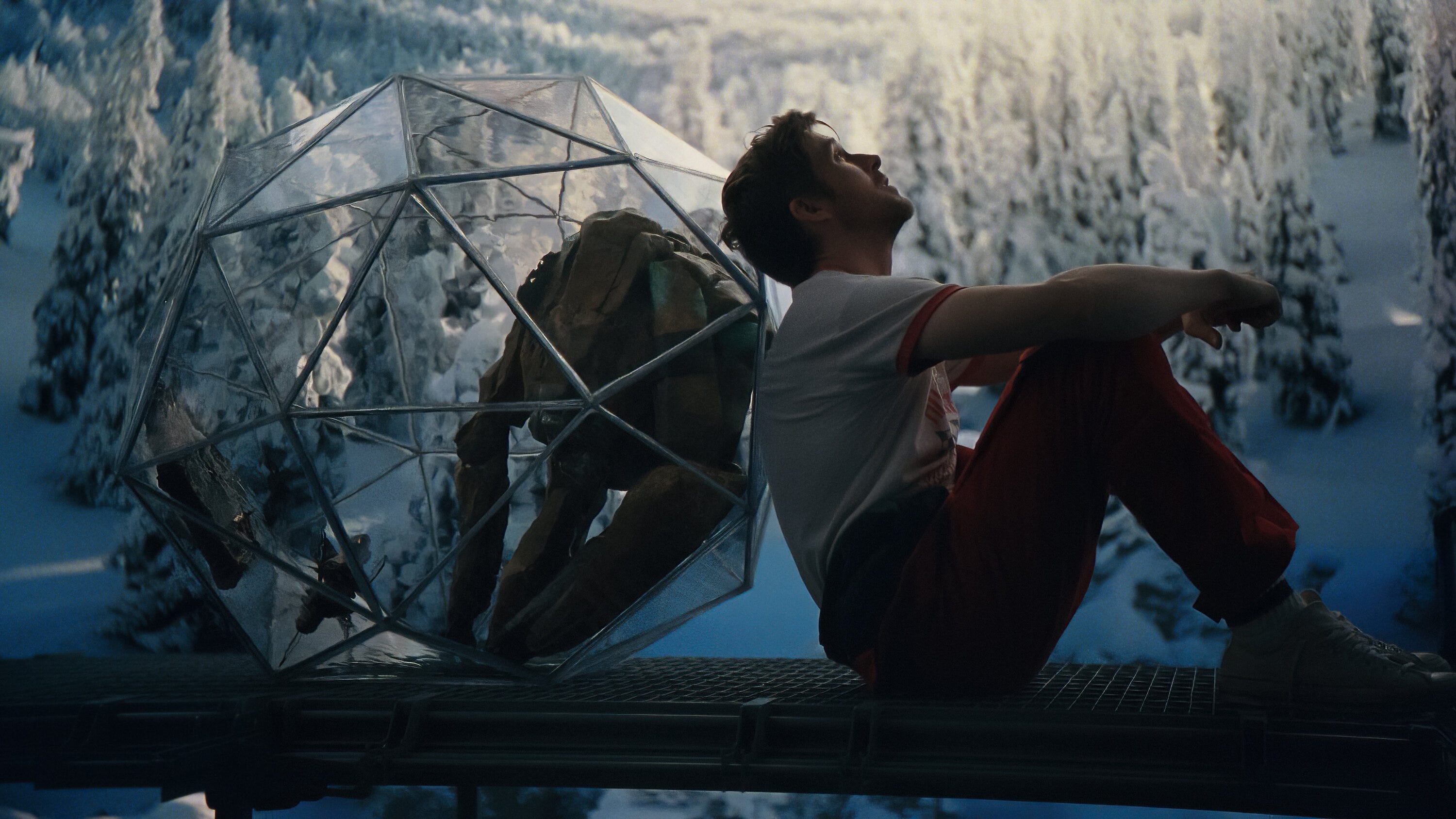
How do you overcome communication gaps? This is a big issue for us AuDHD folks. In this sweet movie, Ryan Gosling’s character (Grace) needed to find a way for he and the alien (Rocky) to communicate so they could work together. He ultimately used his laptop and...I’ll let you see for yourself. The point is, he realized a communication gap existed and needed to be overcome, as opposed to thinking he was normal, the alien was weird and needed to do things the way he did. He also used technology, which has been a godsend for people with disabilities. Tech is a bridge builder.
My boys and I Ubered to the movie. Our Uber driver was a twenty-something young man from Ukraine and he was chatting over the phone with his sister who lives in Poland. My mind filled with guilt and compassion over what his country is going through. I wished him the best. I love how small the world is.
A Conversation About Warm Drinks
We got into the discussion of warm drinks in the morning and how much we both enjoy them. She asked me what I’d enjoy besides coffee.
A large peppermint tea with four packets of honey. This is Starbucks—I don’t know what the other chains offer. I discovered this in an act of desperation one winter. My voice was thwarted by laryngitis and I needed to give a presentation. So I picked up the tea and sipped as I drove. Long story short, that tea brought my voice back for about 90 minutes. It was amazing. After the 90 minutes my voice became hoarse again and when silent again. I’ve used this many times since then and the results have been pretty consistent.
How Your Brain Actually Works
The Neurodivergent Brain On Its Own Terms
Not lazy. Not broken. Not something to fix. Your brain runs on conditions, not willpower. These pieces are about what that actually means—and what becomes possible when you stop fighting it.
Brain Like a Stuck Parking Brake
I try so hard to stay on track… but even the smallest tasks feel impossible some days. Is it just me, or does anyone else feel like this too? How do you deal with it?
I have days when my brain feels like a stuck parking brake. And other days, I’m flying down the highway with wind in my hair (metaphorically), and getting things done. On the stuck days, it’s not just slow. It’s foggy. I’ll read the same sentence three times and still not get it. Someone asks me a simple question and my mind just… blanks. Conversations feel like drunk texting, so I avoid them. Seems like a typical day to me, you say? On off days, it’s worse. I know you get it. And underneath all of that is a mix of guilt and frustration. Some days I can be kind to myself about it. Other days it feels like I’m letting everyone down.
Thing is, this isn’t new. And I’ve learned the hard way that fighting it only makes it worse. When I can accept it, something shifts. There’s a little more grace in the day. I rest more. I stop trying to force my brain to be something it’s not. Maybe I watch videos that don’t require much thought. Maybe I put on music and let that calm and regulate me better.
Because this brain doesn’t run on willpower. It runs on conditions. On the good days, a lot has to line up. A good night’s sleep, a cup of coffee that understands the assignment. My meds are actually doing what they’re supposed to. Around me, it’s quieter. Fewer interruptions. No one rushing me. I’m not bouncing between five tabs and three conversations. Inside, I’m not piling on pressure. I’m not telling myself I “should be able to do this.” I’m not bracing for failure before I even start.
That’s when things start to click. Emails get answered. Tasks get completed. Words come easier.
Because we’re part of an ecosystem. And when the environment doesn’t line up with what our nervous system needs, things break down. Not because we’re lazy. Not because we don’t care. Because the system isn’t aligned.
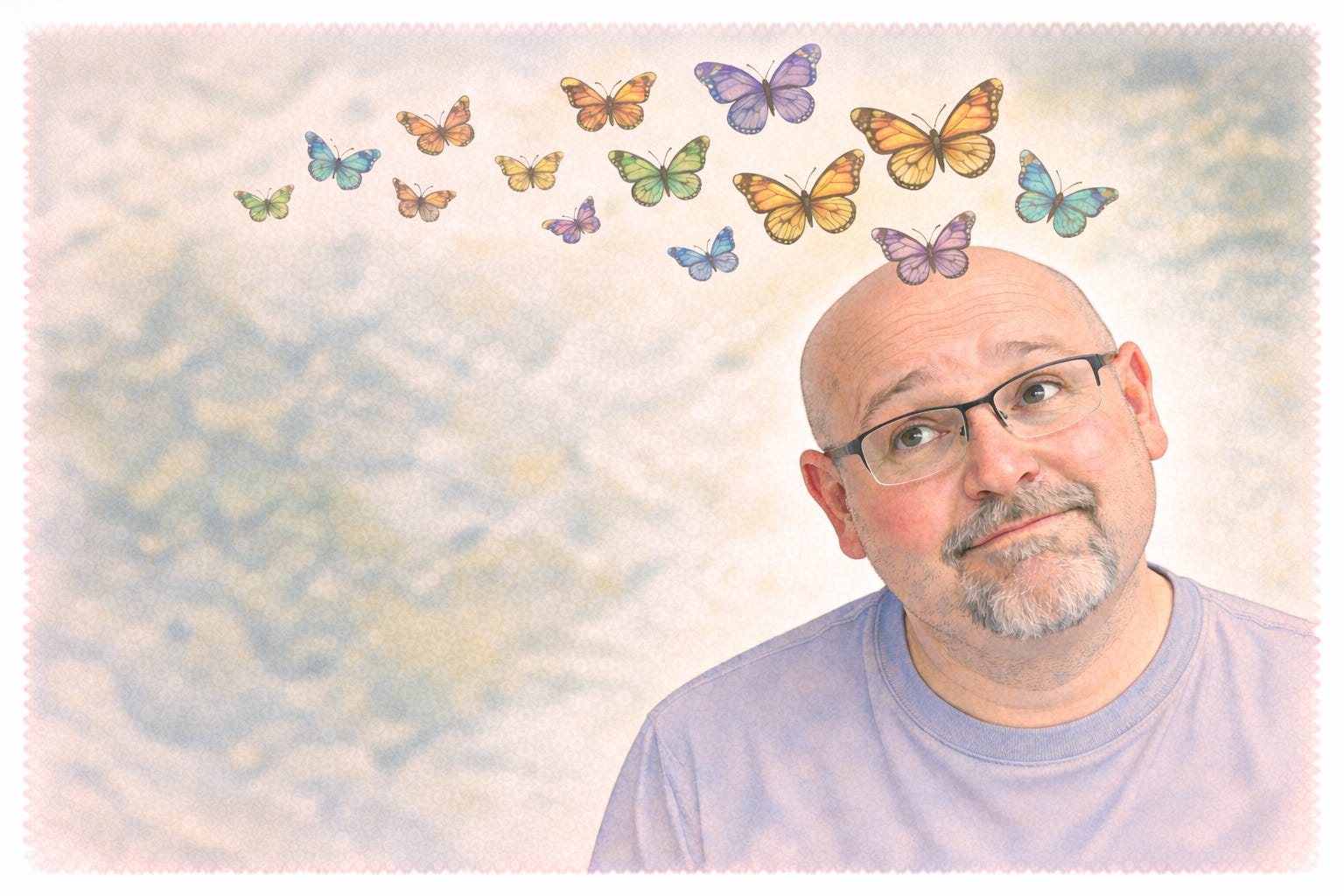
Some days, it takes everything just to get the butterflies in my head flying in the same direction. And if today’s one of those days for you too… you’re not alone.
Magnolia Blooms Don’t Rush
When My World Shrinks
Magnolia blooms don’t rush, but they don’t wait either. One week they’re tight gray buds on bare branches. Then a few warm days hit and the tree opens, white and pink petals the size of your hand catching the morning light. For a short stretch, the whole yard smells soft and sweet. Then the wind picks up. A hard rain comes through. By the end of the week, petals are scattered across the grass and stuck to the sidewalk, already browning at the edges. That’s the deal. You don’t get to hold it. You get to notice it. Same with the moments we keep trying to rush past or circle back to later. Later isn’t where life happens. This is. Right here, while it’s still open.

When You Can’t See Clearly
Perspective & Self-Understanding
Sometimes your world shrinks so far that you can only see what’s in front of you. This piece is about what happens then—and how to borrow perspective from people standing outside the moment.
What I Miss When I’m Inside It
When My World Shrinks
This happens more than I’d like to admit. I’ll be in the middle of something. A conversation, a decision, even just a feeling. And my world shrinks. Not a little. Everything narrows to whatever I’m experiencing right now. Perspective? Gone. Future consequences? Not invited. Other people’s experiences? Not on the guest list. It’s not that I don’t care. It’s that I can’t see.
Borrowing Someone Else’s Eyes
So I’ve learned to borrow eyes. Most often, I’ll turn to my wife and ask some version of: “What else am I not seeing?” Not because she’s “better” than me. Because she’s not inside the same moment I am. She can zoom out when I can’t. And sometimes what she says is obvious. Obvious in the way things only are once someone says them.
Being Told Isn’t the Same as Understanding
Here’s the part people don’t talk about. Being told something doesn’t mean you understand it. I’ve had people explain things to me clearly, patiently, even kindly… and it still didn’t land. Not because I was resisting. Because my brain wasn’t in a position to receive it. Timing matters more than clarity.
Why Information Doesn’t Land
I see this with clients all the time. A parent says, “I’ve told them a hundred times.” And I believe them. But telling isn’t the same as landing. If the nervous system is overwhelmed, if the moment feels threatening, if there’s too much happening inside… information just bounces.
Frozen Ground
It’s like trying to plant seeds in frozen ground. You can throw the best seeds you’ve got. Nothing’s growing until the soil softens.
Performing Understanding
I think a lot of us grew up in environments where the focus was on saying the right thing. Less attention was given to whether it could actually be heard. So we learned to perform understanding. Nod. Say “okay.” Move on. Meanwhile, nothing changed underneath.
A Question I Keep Asking
A question I come back to a lot: Am I trying to be understood… or am I in a state where I can understand? Those are not the same thing.
When the Moment Becomes the Whole Story
There’s also this. When my thinking collapses into the moment, it’s easy to assume that moment is the whole story. “This is how it is.” “This is how it’s always going to be.” “This is what they meant.” It feels true. That doesn’t make it complete.
Workarounds That Actually Help
So I build in workarounds. I ask for perspective. I write things out so I can see them instead of just feel them. I give it time when I can. Not because I’m broken. Because this is how my brain works.
Zoom Lens vs Wide Angle
Some people have wide-angle lenses. Some of us have zoom lenses that get stuck. Both are useful. You just need to know which one you’re using.
A Quiet Check-In
Quick check, if you want one: Who do you borrow perspective from when yours disappears?
If You Don’t Have That Person Yet
And if you don’t have someone yet… That’s not a personal failure. It just means that part of your support system hasn’t been built yet.
The Line I Keep Coming Back To
There’s a line I keep coming back to in my writing lately. Not everything needs to be fixed. Some things just need the right conditions to grow.
If You Want to Go Deeper
If this kind of reflection speaks to you, I share more of it through Agatha’s Garden. It’s a story about what we inherit, what we carry, and what becomes possible when we finally start seeing clearly.
Visit: AgathasGarden.com
Thanks for being you,
Brian R. King, MSW, is a storyteller, coach, and communication expert who helps folks with AuDHD and families build stronger, more authentic relationships. He’s the author of 7 books and hosts the podcast Riffin’ About Life, where real talk meets real growth.
If you’ve ever felt like you’re speaking two different languages with the people you love, Brian’s here to help you translate.
BrianCanHelp.com