

Why One Chore A Day Feels Like Enough
What autistic and ADHD brains spend on tasks others barely notice

Let me say the quiet part out loud.
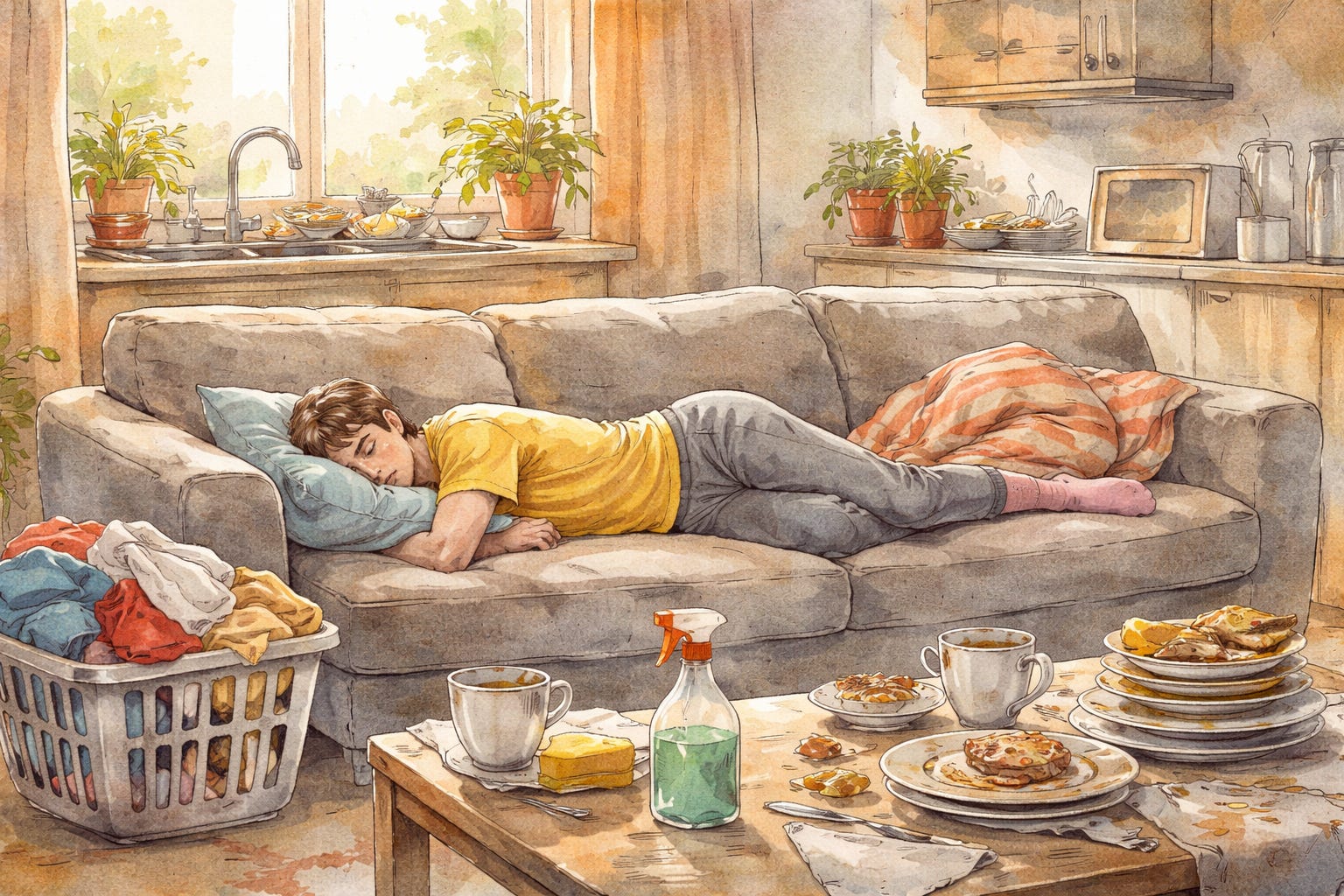
For many autistic or ADHD people (or the fun combo platter, AuDHD), finishing one chore can genuinely feel like they earned the right to rest for the rest of the day.
And if you’re thinking, “Come on, it was just the dishes,” that reaction makes sense. From the outside, it looks like they washed a few plates.
From the inside, it can feel more like they wrestled a raccoon in a phone booth.
What You See vs What It Costs
Here’s the gap that causes most of the frustration.
You see:
“Take out trash. Done.”
Their nervous system experiences:
The startup lag where their body feels glued to the couch
The mental traffic jam of “what do I do first?”
The sensory gauntlet: smells, textures, clanging, water, wet sleeves, the universe laughing
The decision fatigue of a thousand micro-choices other people don’t even notice
The post-task crash where their nervous system goes, “Great. Now we must lie down like a hibernating squirrel.”
So yes, by the time the chore is done, the task is finished.
But so is their battery.
Executive Function Is Not a Character Trait
Some people can flow from task to task like they’re on a moving sidewalk at the airport. Easy transitions. No drama.
AuDHD brains are more like a shopping cart with one broken wheel. You can still push it. It just costs sweat, swearing, and a brief crisis of faith in humanity.
Starting takes effort. Switching takes more. And stopping is weirdly the hardest, because restarting can feel like trying to crank a lawnmower… with emotional baggage… in the rain… while someone says, “Have you tried wanting it more?”
That’s why one chore can hijack the whole day. It isn’t that they don’t care. It’s that their brain just burned half the fuel on ignition.
Why “One Win” Feels Like a Whole Day
A lot of neurodivergent people carry a rule they didn’t choose, but learned the hard way:
“If I finished one thing, I won the day.”
It’s not a flex. It’s a protective shield.
Many grew up being corrected, rushed, criticized, or treated like they were “too much” and “not enough” at the same time. So when they complete a task that required real effort and regulation, they plant a little flag and think:
“Hey. I did a thing. Nobody gets to erase that.”
That isn’t weakness. That’s survival with a sticker chart.
Dopamine Is a Drama Queen
A lot of neurodivergent brains don’t get consistent “reward fuel.” It’s not a steady paycheck. It’s more like a random cash prize.
So when dopamine finally hits after a completed task, it can feel like the grand finale. Fireworks. Confetti. Credits roll.
Now imagine someone taps them on the shoulder right after the credits and says, “Great! Ready for the sequel?”
No. The cast has gone home. The orchestra is packing up. They’re backstage eating peanut butter out of the jar trying to remember their name.
Rest Is Not Laziness. It’s Recovery.
This is the part people miss.
When an autistic or ADHD person collapses after doing something “small,” it’s not because they’re milking it. It’s because their nervous system is doing damage control.
They’re not resting like, “Ah yes, leisure.”
They’re resting like, “If I don’t lie down, I might start crying because a fork touched my hand wrong.”
Big difference.
Related Reading…

To the Frustrated Parent or Partner
At this point, a lot of parents and partners are thinking:
“So we’re not supposed to expect anything from them?”
No. You can absolutely expect things.
But it helps to expect them like you’d expect things from someone with limited battery life, not someone who’s fully charged and pretending.
A better question is:
“What kind of expectation is realistic, and what helps them succeed?”
Here are a few shifts that change everything:
Swap ‘more’ for ‘clearer.’
“Clean the kitchen” is a fog bank. “Put dishes in the dishwasher for 5 minutes” is a target.Use fewer tasks, done more consistently.
Two small chores done predictably beats one giant chore that triggers shutdown and avoidance.Build in recovery on purpose.
Rest after a task isn’t a reward for being dramatic. It’s how the next task becomes possible later.Focus on sustainability, not intensity.
The goal is not a heroic Saturday collapse. The goal is a livable week.Separate support from enabling.
Support says, “Let’s make this doable.” Enabling says, “You never have to try.” Those are not the same thing.
You can hold expectations and still be compassionate about the wiring.
Structure is not the enemy. Shame is.
This week's podcast episode...
What I Hope You Take From This
So when an autistic or ADHD person says, “I did the thing, so I’m done,” it isn’t entitlement. It isn’t a tantrum. It isn’t a moral failure.
It’s honesty.
What looks “small” to you might have cost them a lot.
And the miracle isn’t that they did one chore.
The miracle is that they did it while their brain was yelling, “Absolutely not,” and they still showed up anyway.
If you live with someone like this, here’s the best translation to keep in your pocket:
They’re not avoiding life.
They’re recovering from it.
And yes, sometimes they really did need a nap after the trash.
Welcome to the glamorous world of executive function.
We can do this, we’re in it together.
One Last Thing,
Yesterday, I finished writing my first Novella, called “Agatha’s Garden”.
A neurodivergent young man inherits a garden he never expected to return to, and accepting it becomes the first step in releasing his grief and learning how to take up space in his own life.
Lot’s of editing now. Stay tuned 🙂
Thanks for being you,
Everything Brian offers, one click away—coaching, podcast, courses, and more:
View all Brian’s Links” https://brianraymondking.com/links/